The Characteristics Matrix is the tool that makes sure nothing on the drawing gets forgotten. Yet many companies don’t use one.
The balloon numbering habit
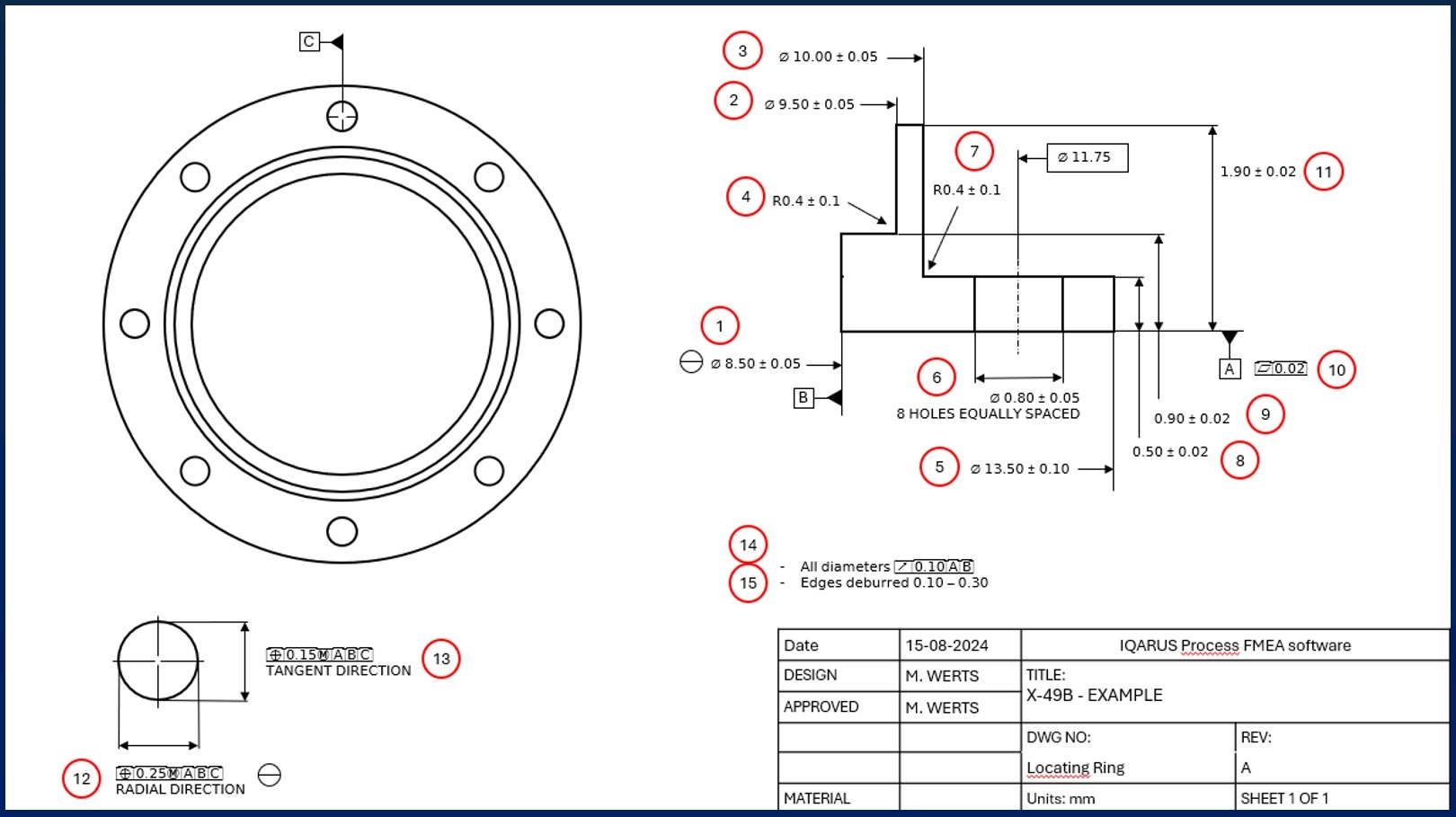
One number, understood by everyone. Every feature on the drawing, and every additional spec in the notes, gets a balloon number.
Ask the customer to share their own numbering and use the same numbers throughout your documentation. No more ambiguity between “that dimension” and “feature 14”.
What the matrix actually does
Are we covering every feature, somewhere? The matrix is a structured list of every ballooned feature, linked to the process steps where it is relevant.
Without a matrix, this check happens informally. With a matrix, every feature must be explicitly linked. A missing link is immediately visible.
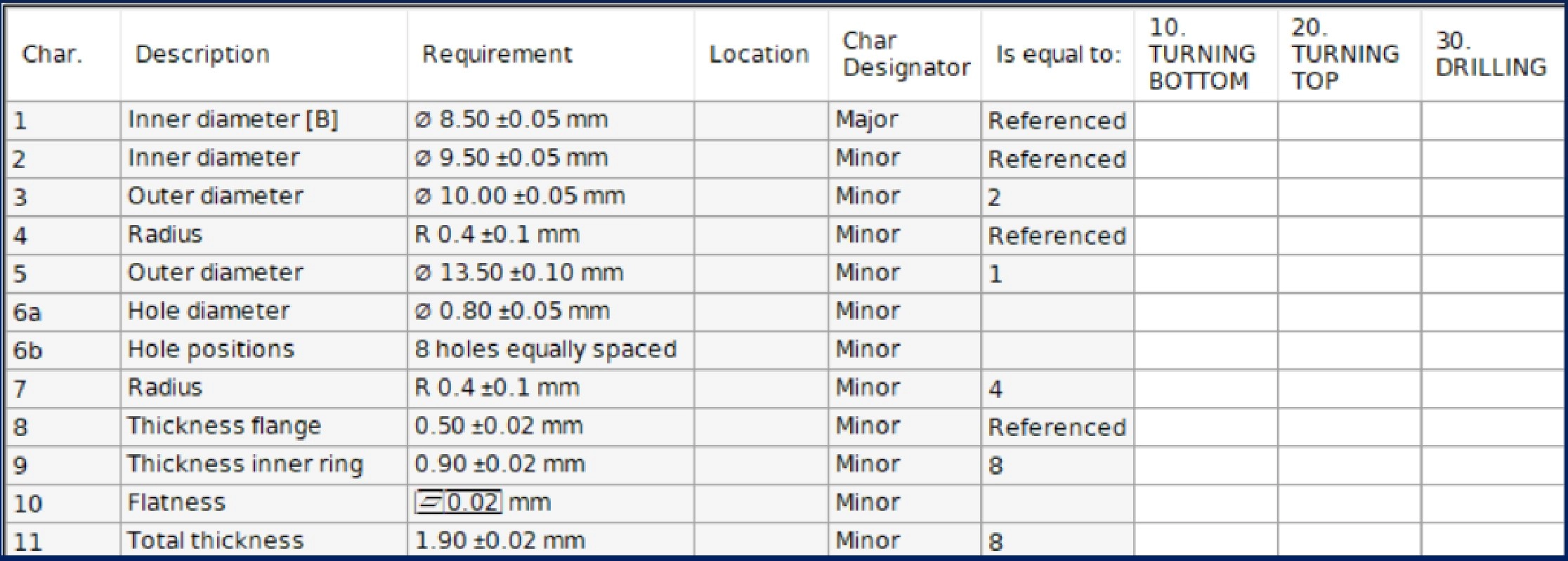
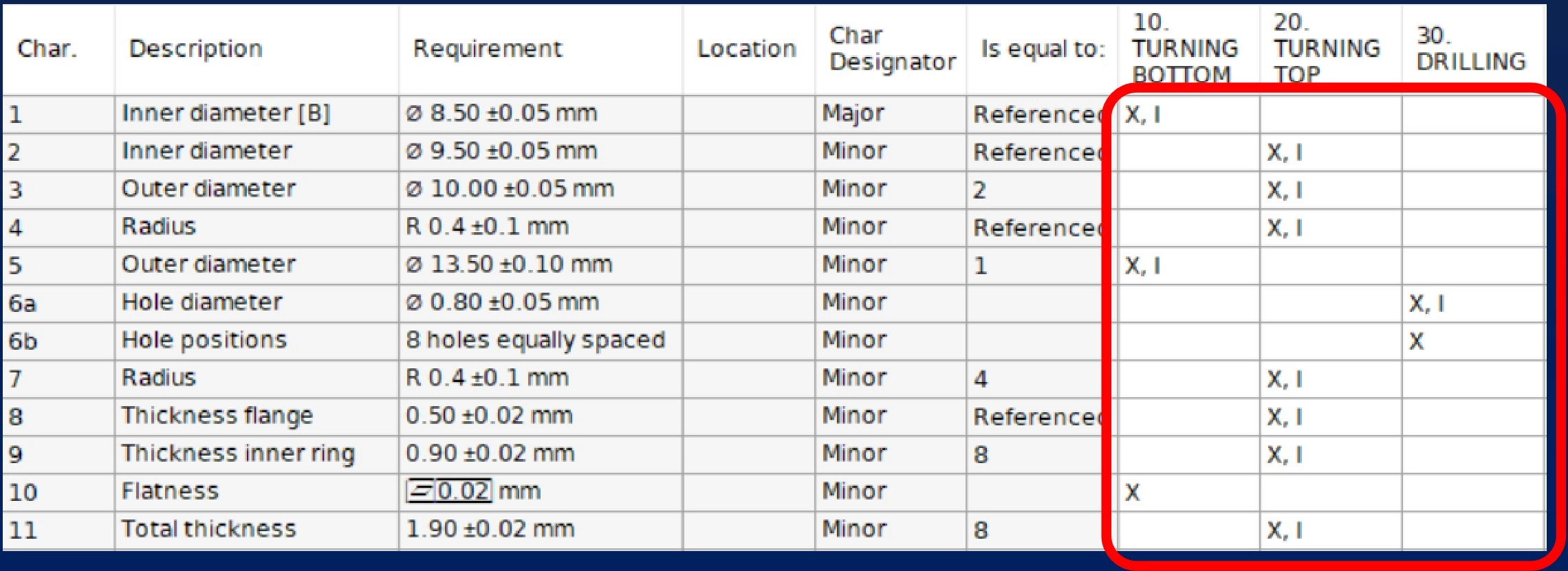
Created, inspected, affected
A feature is rarely relevant at just one step. For each feature: where is it created? Where is it inspected? And, often overlooked, where might it be affected by a later step?
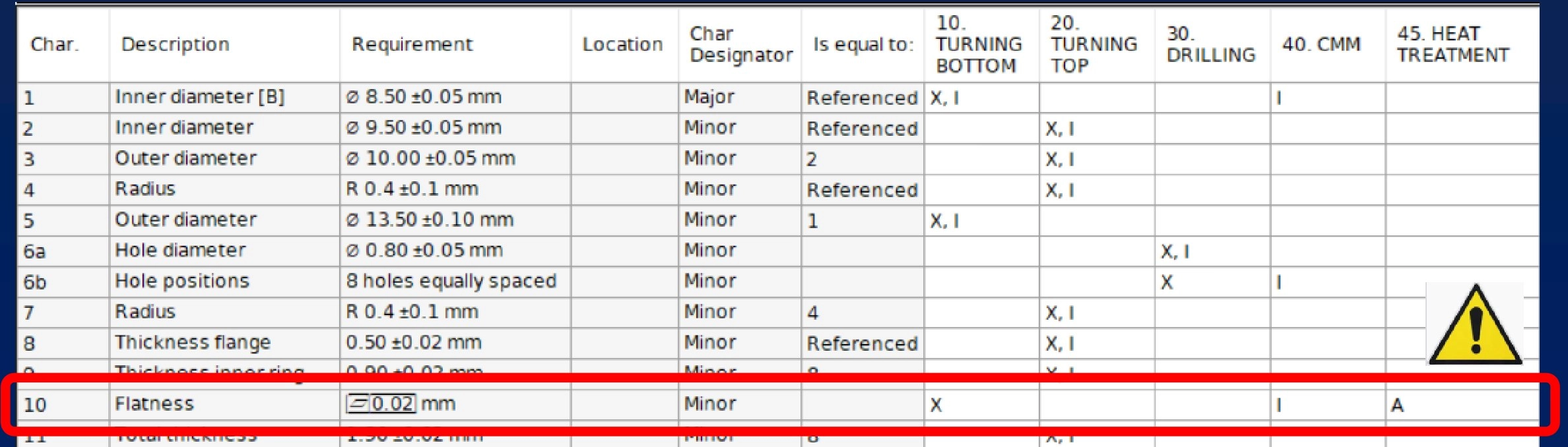
The heat treatment example
A brazing or heat treatment step, done for entirely different reasons, can distort a part and affect a feature’s flatness, one that was already machined earlier.
If your matrix only tracks where a feature is created, this risk is invisible. Tracking where it is affected flags the need for reinspection before the part moves on.
One matrix, no forgotten features
In IQARUS, the Characteristics Matrix is directly linked to the pFMEA. Every feature you list becomes a starting point for the risk analysis, with created, inspected and affected steps included. Read also why your pFMEA and Control Plan don’t always agree, or see the Characteristics Matrix module.
Ready to get started? With IQARUS you create linked pFMEAs, Process Flow Diagrams and Control Plans, with reference FMEAs that keep everything up to date. Try IQARUS free for 3 months, no account needed.