In an FMEA you give each risk three scores from 1 to 10:
- Severity (S): how serious is the effect?
- Occurrence (O): how likely is it that the cause occurs?
- Detection (D): how well do you detect the problem before it reaches the customer? A high score means: hard to detect.
Based on these scores you decide which risks to work on first. There are two methods for this: the Risk Priority Number (RPN) and Action Priority (AP). They are often presented as a choice. In practice, you get a better analysis by using them together.
Risk Priority Number (RPN)
The RPN is the product of the three scores: RPN = S × O × D. The result lies between 1 and 1000. It is simple and easy to explain, but all three scores carry the same weight. A risk with S=10, O=2, D=5 gets the same RPN (100) as a risk with S=2, O=10, D=5, while the first one deserves much more attention.
Action Priority flags your critical risks immediately
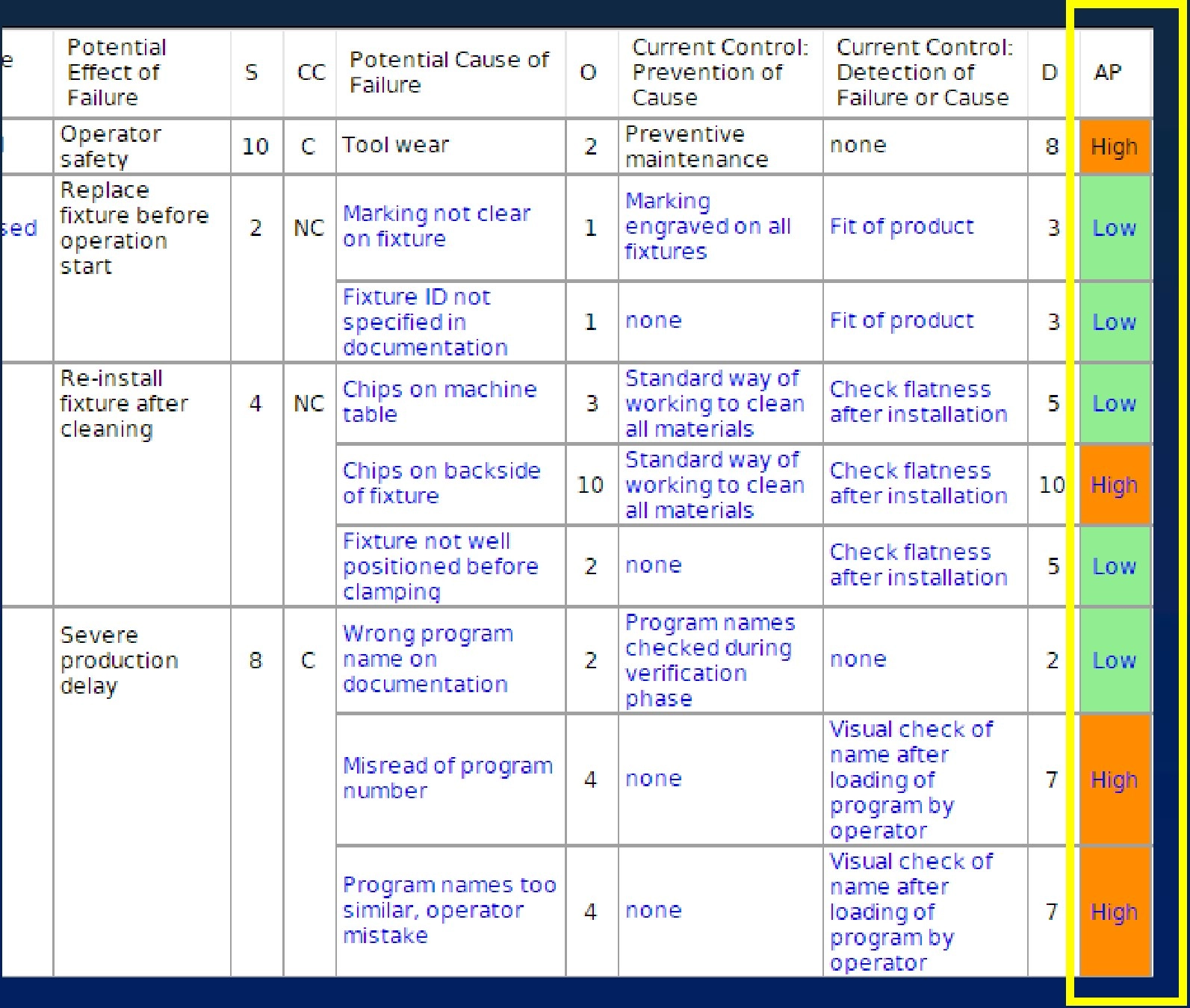
The 2019 AIAG-VDA FMEA Handbook introduced Action Priority. AP uses a priority table where Severity is the dominant factor, and places every combination of S, O and D in one of three levels: High, Medium or Low.
A high-severity failure mode is High AP, regardless of how low Occurrence and Detection are. That makes AP very good at one thing: identifying your most critical failure modes.
RPN adds granularity within High AP
But AP does not tell you where to start. Take two failure modes from the same pFMEA:
- Tool wear, with an effect on operator safety: S=10, O=2, D=8. RPN 160.
- Chips on the backside of the fixture, so the product is not flat after cleaning: S=4, O=10, D=10. RPN 400.
Both are High AP. But they are not the same problem. The first is serious but rarely happens; the second happens all the time and nobody detects it. You still need to make choices, and that is where the RPN helps: it ranks and sequences the risks within the High AP group.
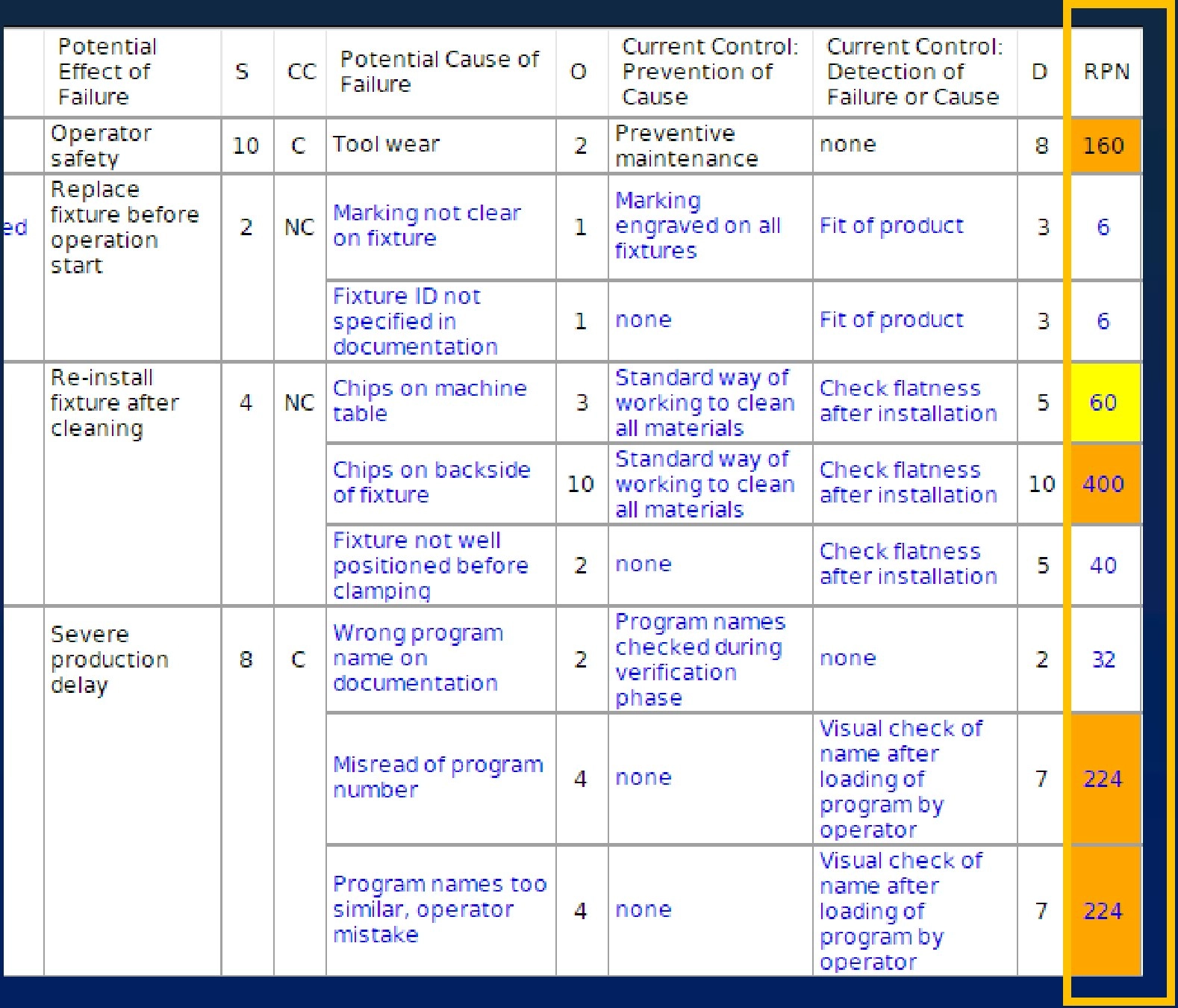
Use AP to identify, RPN to sequence
- AP to identify your most critical failure modes
- RPN to rank and sequence within the High AP group
- AP again when presenting results to management
AP tells you what needs action, RPN tells you in what order. Switching between the two gives you a more complete picture than either method alone. Does your customer work according to AIAG-VDA? Then AP is usually expected in the documents you deliver; check your customer’s customer specific requirements.
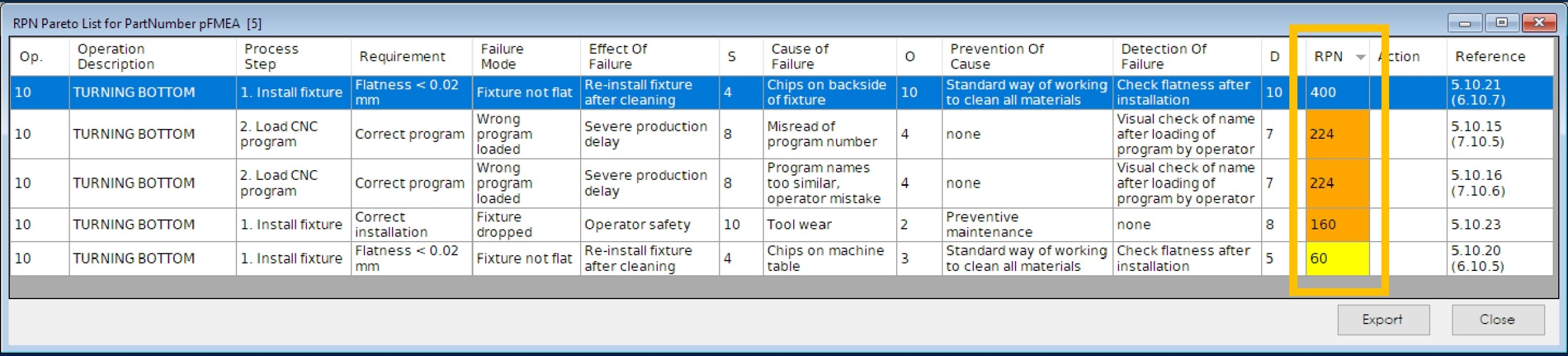
Both in IQARUS
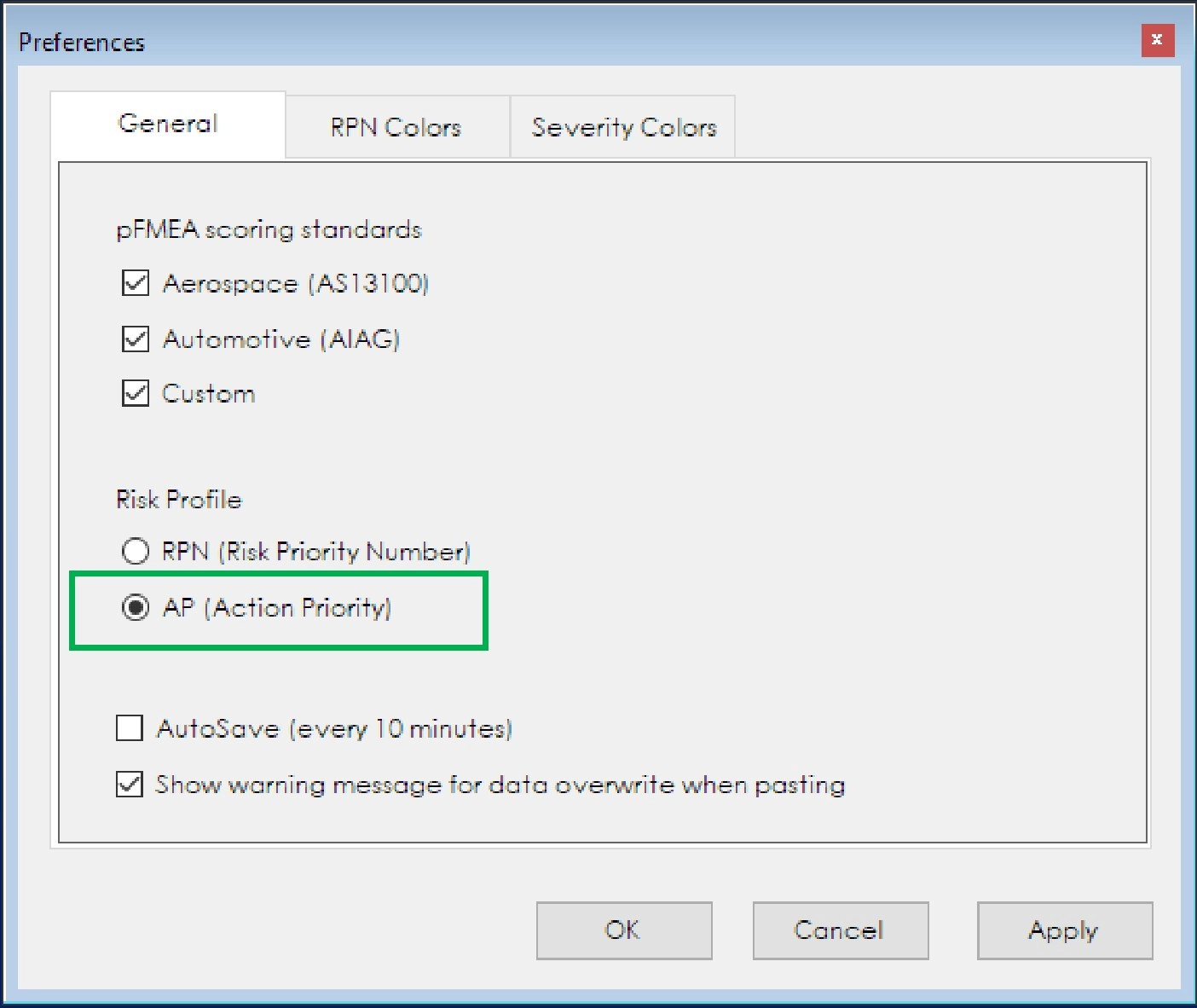
IQARUS supports AP and RPN side by side, and you switch between them with one setting, without rebuilding your FMEA. You set the colour coding yourself, and one click generates a priority list sorted by RPN. Read more about the action list of your pFMEA, or see it in the pFMEA instruction video.
Ready to get started? With IQARUS you create linked pFMEAs, Process Flow Diagrams and Control Plans, with reference FMEAs that keep everything up to date. Try IQARUS free for 3 months, no account needed.